Scarves
Duman Buta
₺3,500 · ≈ €63
Scarves
Duman Buta
₺3,500 · ≈ €63
Charged in Turkish Lira (₺). € shown is indicative.
75 × 75 cm · Pure natural silk kelaghayi, hand block-printed and dyed with plant-based natural dyes
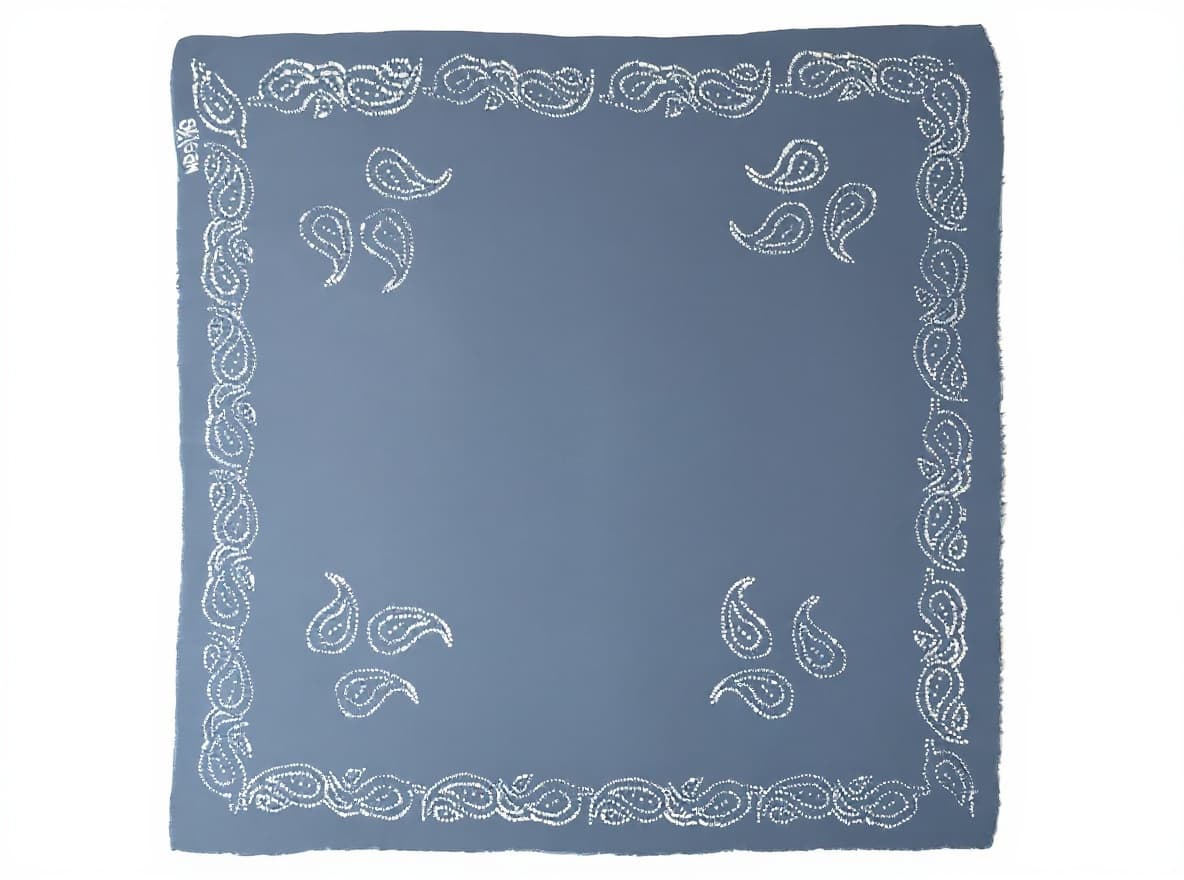
Bandhani butas on smoky slate — a calm, composed rhythm.
Limited edition — each piece hand-blocked, no two alike
- ✓Complimentary shipping over ₺5,000 — below that ₺150 within Türkiye, €30 worldwide
- ✓Delivered in 3–5 days
- ✓14-day returns
Smoky slate blue-grey is a calm and mature tone; calm colours speak of composure. Bandhani-dotted butas, both scattered and bordering, set an elegant rhythm. Its name comes from the smoke (mist) tone and the buta.
75 × 75 cm Pure natural silk kelaghayi, hand block-printed and dyed with plant-based natural dyes Dry clean only. Store rolled, away from direct sunlight. A silk care guide is included with every order.
The Maker · Şəki, Azerbaijan
Hand-dyed in Shaki, Azerbaijan, using plant-based pigments and woodblocks carved by a kelaghayi master — a UNESCO Intangible Heritage craft.
The Story of Şəki Silk →How it was made
A kelaghayi is made in four stages, and the order never changes: the silk is woven, the stamps are cut, the pattern is printed, and last the cloth is dyed. Dyeing is the stage everything else answers to. The workshop it happens in has its own name, the kupkhana, and so does the person who does it — the boyaqchi, who was traditionally held to be the figure the whole process turns on.
The stamps are cut from hardwood, pear or walnut, and in Basqal there are households still printing with blocks more than three hundred years old. The block is charged with hot wax and pressed to the silk; wherever the wax sits, the dye cannot reach. Then the cloth goes into the vat, the wax is boiled out, and if the pattern calls for a second colour the whole sequence runs again. The master is handling boiling dye and heavy stencils throughout, which is why the craft has always been described as physical work rather than delicate work.
Only plants, tree bark and flowers go into the dye. The golden tones come from something as ordinary as onion skin. Because every step is done by hand, two scarves are never quite the same — the tradition takes that as a fact about the process rather than a flaw in it.
Reading the pattern
The ornament is not decoration that happened to settle on the cloth. Each motif carries information, and the literature of the craft calls the whole system a book of life for anyone who can read its signs. Borders and centre take different stamps: pomegranate flower, crescent, grapevine and sun around the edge; small flowers, coins, quince flower, gazelle eyes, cat’s paw and leaf across the field. Plant motifs run to rose, narcissus, carnation, poppy, lily and iris, and they are set against straight and broken lines, zigzags, rhombuses and stars.
Colour is read the same way. Blue, red and ochre gold are the healing colours, credited with turning away the evil eye. Age and standing govern what is worn: dark, quiet tones and sparse ornament for an older woman; bright colour for a young one, who by tradition would not put on a black kelaghayi even at a funeral. The seven-colour work — red, blue, yellow, green, white, pink and dark brown on a single cloth — is held to be the ceiling of the craft.
Living with it
Natural silk wants cool water and a gentle hand, or a dry cleaner who is told what it is. Keep it out of direct sun for long stretches, and store it folded loosely or rolled rather than pressed hard along one crease. Plant-dyed silk is not colourfast the way a synthetic dye is; that is the trade for colour that came out of the ground, and it settles rather than fades if you treat it kindly.
The traditional headscarf is a metre and a half square. These are smaller on purpose — 90 × 90 for the head, the shoulders or a bag, 40 × 40 for the wrist or the throat — so the pattern is drawn to be read at the size you will actually wear it.
Duman Buta
₺3,500