Azerbaijan
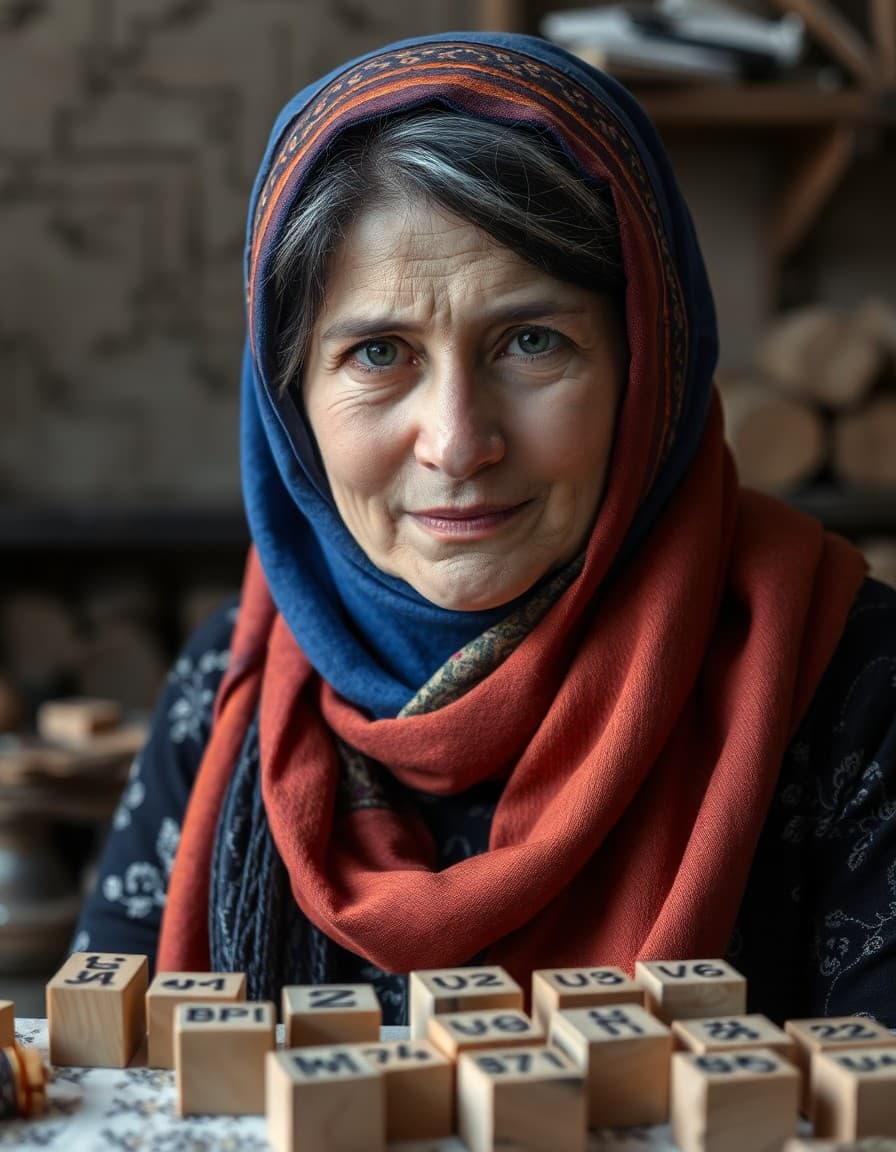
Hello, I'm Narmin
Hasanova
I am a kelaghayi artisan, fourth generation. This technique is UNESCO heritage, and it is my inheritance. Silk is not a choice for me — it is the only material this tradition has ever known.
A fourth-generation kelaghayi artisan from Şeki, Narmin Hasanova is one of the last masters of Azerbaijan’s UNESCO-recognized silk dyeing tradition. She learned the art of block-stamping silk with paraffin resist from her father, who learned from his father before him. Her work is the living preservation of a cultural memory inscribed on the UNESCO Intangible Heritage list in 2014.
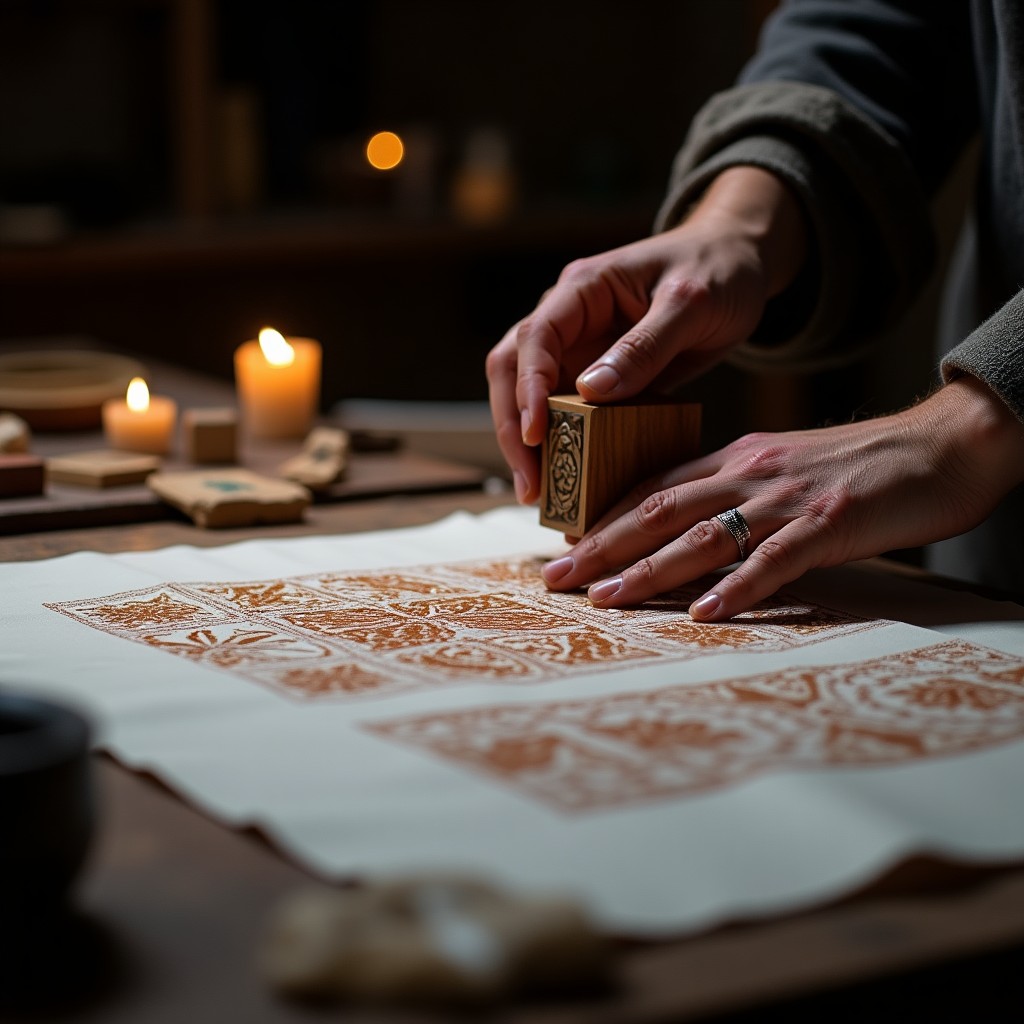
People come here and ask me to explain the technique. I show them the galib, the paraffin, the dye bath. They watch me press the stamp. They say: is that all? It is not all. It is thirty years. My father pressed his first galib at the age of seven. His father pressed his first galib at the age of seven. I pressed mine at the age of seven. My daughter pressed hers last year. She is nine now — she started late, we worried about her. What I cannot explain is what happens in the moment of contact — stamp to silk. There is a second before you press where you know, from the weight of your arm and the give of the fabric, whether the impression will be right. You cannot learn that from a video. You cannot learn it from a book. You learn it from ten thousand wrong impressions, and then one morning you wake up and you know. The artists who send me their patterns — they have seen something true in their own tradition. I see it in the lines. My job is to carry that truth into silk without losing it. That is what five hundred years of kelaghayi has taught us to do.
— Narmin Hasanova, Şeki, Azerbaijan
Motif
Buta — the eternal flame
Şeki, Azerbaijan · kelaghayi · 500 years
How a collaboration works
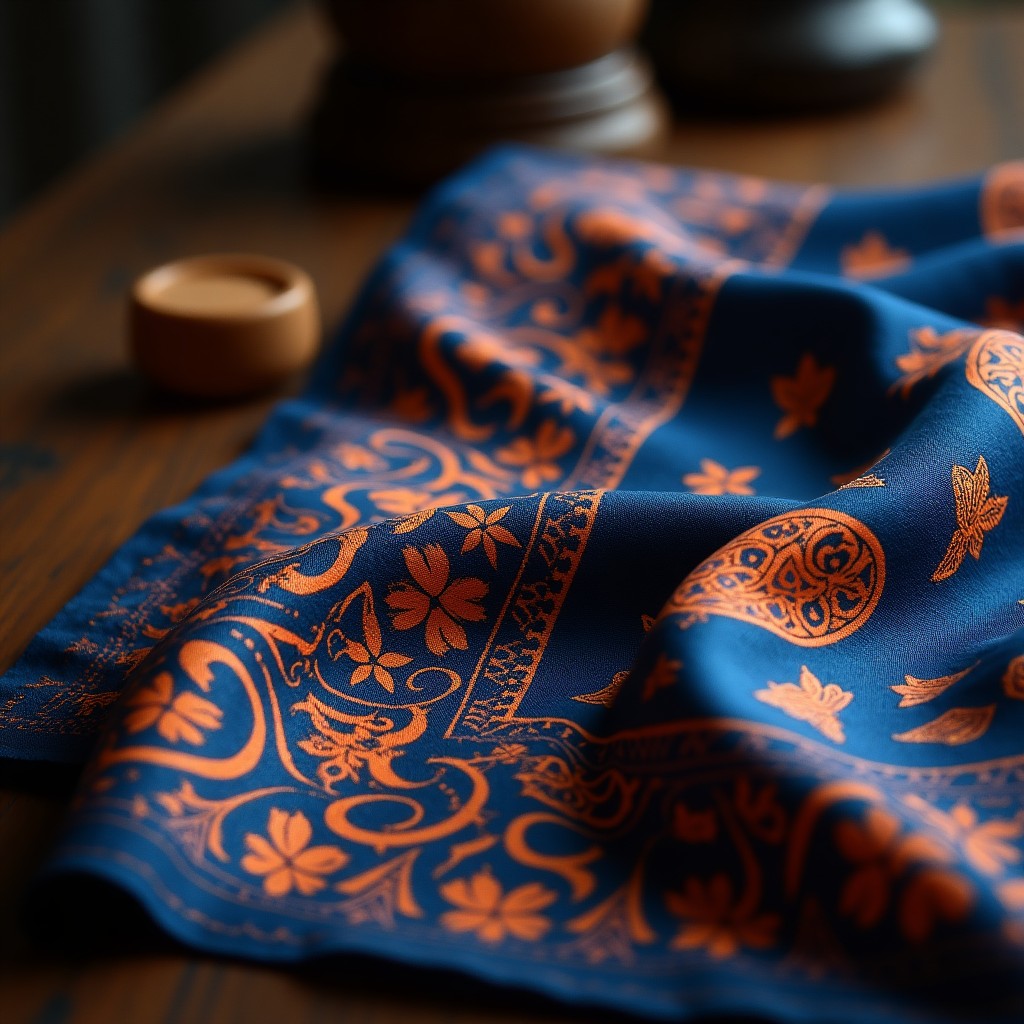
Each artist here drew a pattern, and a master in Şəki turned it into cloth. Those are two separate skills and neither one substitutes for the other: the drawing decides what the piece says, and the block-cutting and dyeing decide whether silk can be made to say it.
The artists were not asked to imitate Azerbaijani ornament. They were asked for their own — shibori from Japan, adire from Nigeria, the block-printed vocabulary of Rajasthan, the wool figures of a Kyrgyz shyrdak — and then that drawing had to survive being cut into pear wood and held under hot wax. What comes back is neither the artist’s tradition nor Şəki’s. It is the argument between them.
The signature
Every artist page carries a signature, and every piece is published under the name of the person who drew it rather than under a house style. That is deliberate. A kelaghayi is anonymous work by tradition — the stamps in Basqal have outlived the names of everyone who cut them — and putting a name back on the cloth is the one thing Navohi does that the tradition does not.
Some artists have a full collection here. Some have a single concept piece that was never made. Both are on the page, because the record of what was proposed is part of the record of what exists.
Reading the pattern
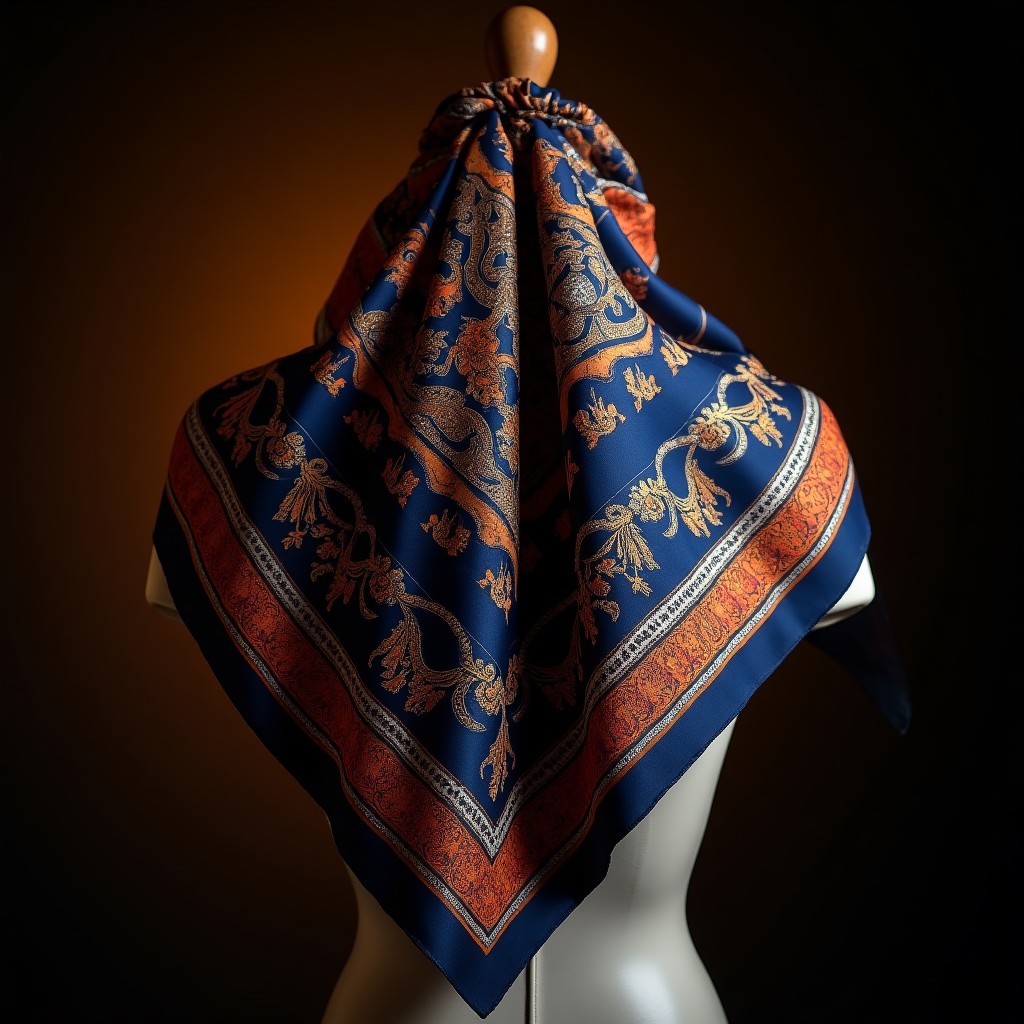
The ornament is not decoration that happened to settle on the cloth. Each motif carries information, and the literature of the craft calls the whole system a book of life for anyone who can read its signs. Borders and centre take different stamps: pomegranate flower, crescent, grapevine and sun around the edge; small flowers, coins, quince flower, gazelle eyes, cat’s paw and leaf across the field. Plant motifs run to rose, narcissus, carnation, poppy, lily and iris, and they are set against straight and broken lines, zigzags, rhombuses and stars.
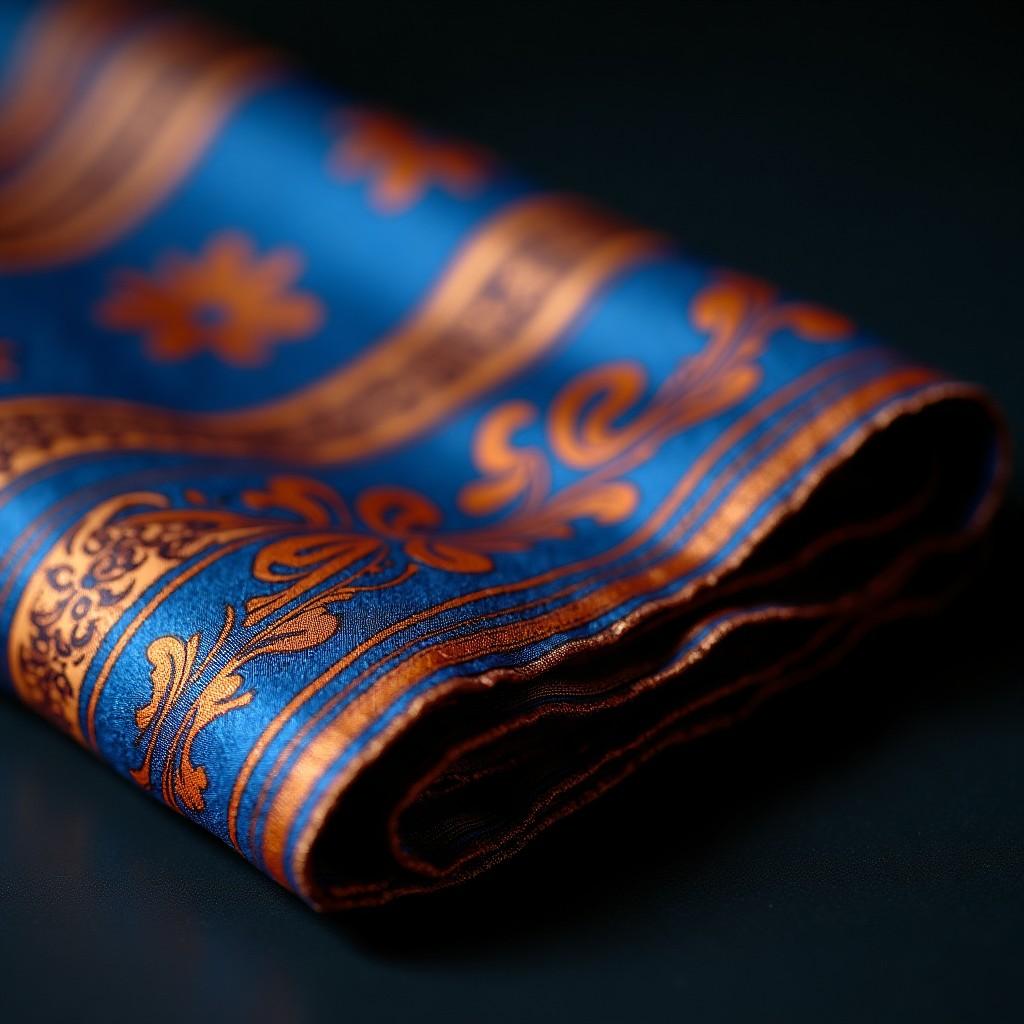
Colour is read the same way. Blue, red and ochre gold are the healing colours, credited with turning away the evil eye. Age and standing govern what is worn: dark, quiet tones and sparse ornament for an older woman; bright colour for a young one, who by tradition would not put on a black kelaghayi even at a funeral. The seven-colour work — red, blue, yellow, green, white, pink and dark brown on a single cloth — is held to be the ceiling of the craft.